
Greeting with Salam is an act that creates love and respect between two people. Allah has commanded us to greet everyone with Salam and to spread it, whether you know the person or not. A beautiful Salam reflects a person’s good character; it does not allow pride and arrogance to grow in the heart, and it brings great reward and blessings.
Importance of Salam in Islam
Salam has great importance in Islam. Islam strictly forbids arrogance, because Allah Almighty strongly dislikes pride. Pride belongs only to Allah. That is why Islam has commanded Salam, so that humility and modesty may develop within you. A person, whether young or old, should greet everyone with Salam. Islam does not say that if someone is older than you, do not greet them, or if someone is younger, do not greet them, or greet only those of your own age—this is absolutely not the case. Young should greet elders, and elders should greet the young, especially when meeting brothers, they should greet them with love, and children should be taught to say Salam. InshaAllah, peace and harmony will surely develop in our society.
Who Should Say Salam First
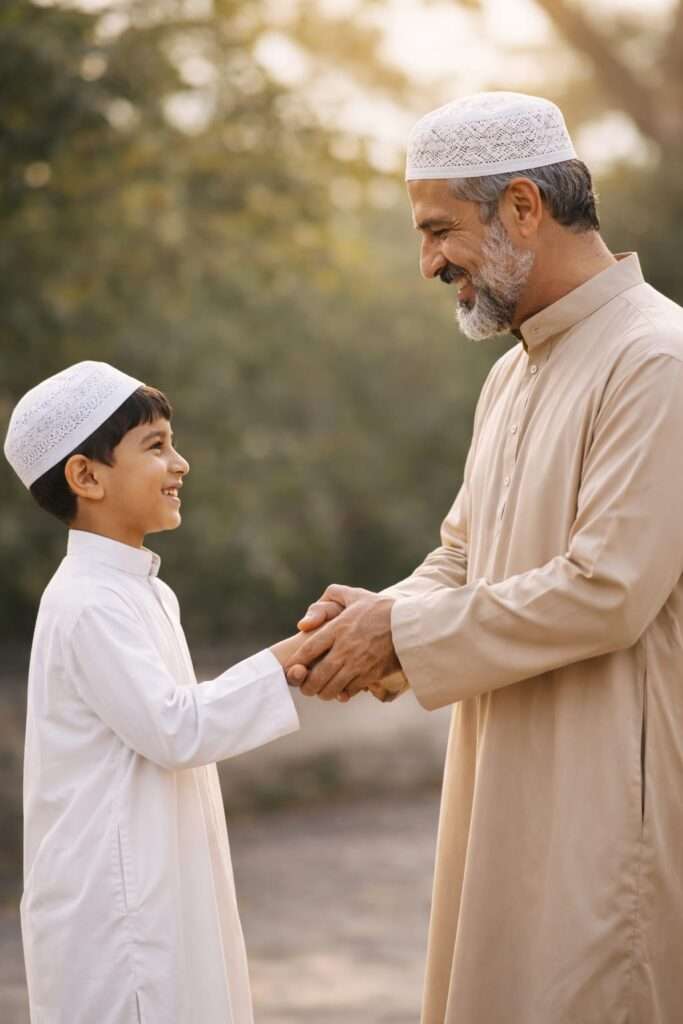
There is no restriction on giving Salam regarding who should greet first. Whoever gets the opportunity first should give Salam. However, from an ethical point of view, younger people should greet first. When young children come in front of their parents, they should greet first, because through this they will receive the reward of Salam as well as the reward of showing respect. Similarly, we see in schools, colleges, and universities that when a teacher enters the class, all students stand up and greet them with Salam; this is respect for the teacher. But in these actions, the teacher should also be mindful that responding to the students’ Salam does not create pride within them, thinking that others are standing for them. Therefore, the teacher should reply to the Salam happily, so that it does not seem that arrogance exists within us or that we respond to Salam reluctantly. Elders should make Salam common, because through this, the habit of giving Salam will naturally develop in children.
Saying Salam Always With Smile
Always remember this principle about greeting with salam: it should be done with a smile, not with a stern or angry face. Salam reflects your character and shows how you meet and treat others. If someone greets you with salam, even if you do not like that person, it is obligatory upon you to reply to the salam. In the first place, hating another person is strongly disliked by Allah Almighty.
If there is enmity or resentment toward someone within the family, or with any other person, then on occasions like Eid, everyone should meet and forget all grudges and hatred. Our Islam loves forgiveness and commands us to avoid hatred.
Replying to Salam Properly
Throughout the post, we have talked about giving salam. Now let us talk about replying to salam. Remember, replying to salam is the right of the person who offers it. It makes them happy. When you reply to someone’s salam with good manners and kindness, Allah creates love for you in that person’s heart.
Below are some benefits of replying to salam:
- By replying to salam, the greeting becomes complete.
- Replying to salam creates love in the hearts of both people for each other.
- Allah Almighty becomes very pleased.
- Arrogance and pride come to an end.
- In society, Allah places respect for that person in the hearts of others.