
Home is the strongest source for spreading Islam. If family members follow Islamic teachings, the home environment improves, and they naturally invite others toward deen. When the women of a house follow Islamic teachings, they also encourage other women. In this way, Islam spreads from home to every home.
Parents as first Teacher
We know—and fully agree—that the best teachers are parents, because a child spends all his early life with them. No one understands a child better than the parents. Just as they teach eating, sitting, talking, and reading, Islam has also commanded them to teach their children deen, invite them toward righteousness, act upon it themselves, and guide their children with wisdom instead of criticism.
In our view, when parents teach good values, it becomes most effective because children follow their parents without fear or hesitation.
How Parents Train Their Child at Home
As we have already explained in detail in our previous posthttps://noorulilmonlinequranacademy.com/begginer-quran-students/about how parents can play their role as teachers in the upbringing of their children, similarly they can also create an Islamic environment at home and develop it in their children in the following ways:
- Parents should teach children the importance, reward, and virtues of good deeds so they grow up loving righteous actions.
- Children should be stopped from bad behavior and clearly taught that Allah becomes displeased with sinful actions. This builds awareness of accountability from an early age.
- Parents should avoid fighting and arguments in front of their children. Fighting is wrong in itself, and it can leave deep and negative effects on a child’s mind.
- Parents should ask their children daily what good deeds they performed—whether they helped at home, served their elders, or supported their family members. This habit builds responsibility and good character.
By following these steps consistently, parents can nurture strong Islamic values and a positive moral foundation in their children.
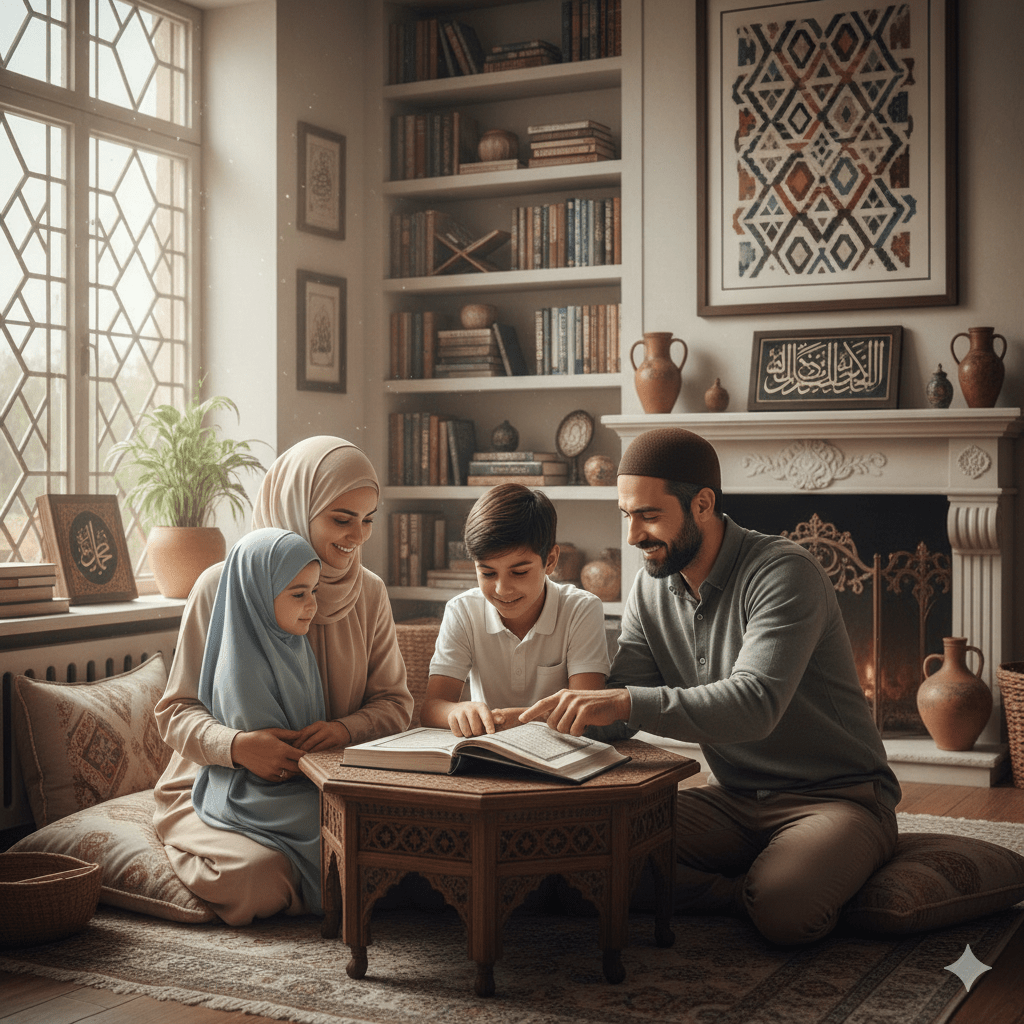
Sunnah Manners For Kids
Teaching children manners is an important and continuous practice. When parents act on these manners, children naturally learn them. Teach children that whenever they start any task,they should begin with Bismillah. When meeting or speaking to someone, they should show respect. If they see anyone in difficulty, they should help and make dua for them. When someone receives good news, they should congratulate them. Visiting the sick is also a noble manner.
If children follow these manners from a young age, they grow up with them as natural habits.
Some Best Sunnah Manners for Kids
- Children should learn one new Sunnah every day and try to practice it. Small, consistent actions build strong habits.
- They should share with their elders how they practiced the previous day’s Sunnah and reflect on whether any mistake was made. This builds accountability and confidence
- .Before sleeping at night, they should make the intention that they will follow the Sunnah throughout their lives. A sincere intention strengthens commitment.
- Most importantly, children should encourage their close friends to follow the Sunnah as well. They should strive to become good individuals themselves and invite others towards goodness.
InshaAllah, if children follow these practices from childhood, they will grow up to become strong, pure, and sincere Muslims.
Creating an Islamic Home Environment
The most important thing is to create an Islamic environment at home. Parents should keep their children informed about Islamic teachings and help them understand deen. Women of the house should also learn Islamic teachings and encourage other women to do the same. This is how deen spreads from home to home.
How Can We Create an Islamic Environment in Our Home?
Creating an Islamic environment at home requires conscious effort and regular practice. Some important steps are:
- Every family member should follow Islamic teachings by offering Salah, reciting the Holy Quran, keeping fasts, and acting upon Islamic guidance in daily life.
- Show patience during difficulties and express gratitude to Allah in good times. This builds strong faith and trust in Allah.
- Respect and serve parents, avoid speaking disrespectfully to them, and show kindness and affection to younger family members.
- Make the recitation of the Holy Quran common in the home. Regular Quran recitation removes negativity, reduces conflicts, and protects the home from evil influences.
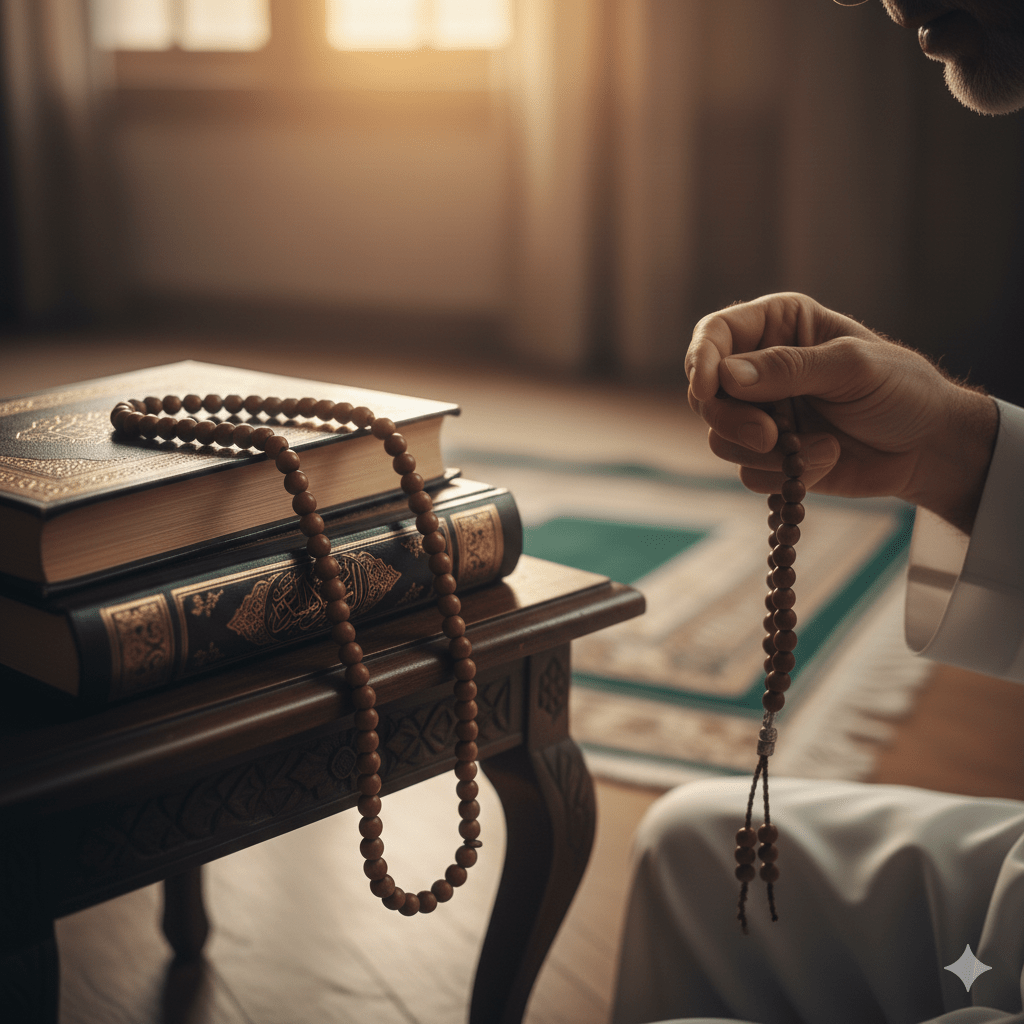
Daily Zikr Routine
Daily zikr is an important part of our ibadat. It includes masnoon duas, remembering Allah by His beautiful names, and calling upon Him, such as Astaghfar, Allahu Akbar, SubhanAllah, Alhamdulillah after every prayer.
It also includes daily supplications. Children are taught to thank Allah for every blessing, like food, to sit quietly after prayer, recite tasbeeh, seek protection from Jahannum, and make dua for Jannat.
InshaAllah, Allah will surely bless us with His mercy.
\
Benefits of Daily Zikr in Daily Life
Zikr (remembrance of Allah) is one of the easiest ways to connect with Allah. It brings many benefits in this world and the Hereafter. Some important benefits are:
- Through Zikr, the love of Allah increases in the heart, and the love of worldly things decreases. A person becomes more focused on pleasing Allah.
- The Holy Prophet ﷺ described the one who remembers Allah as alive, and the one who does not remember Him as dead. This shows how great and important Zikr is in Islam.
- Zikr brings light (noor) into a person’s heart. Because of this spiritual light, a person performs other good deeds with happiness and enthusiasm.
- The heart of a person who does Zikr remains illuminated and soft, while the one who neglects Zikr may develop a hard heart.
My Personal Experience With an Islamic Lifestyle at Home
As a student and a young person, I am not yet a parent responsible for raising children. However, as a Muslim and an Ummati of Prophet Muhammad ﷺ, I believe it is my responsibility to create and follow a good Islamic lifestyle in my daily life.
Alhamdulillah, my family also follows an Islamic environment at home, and I have learned many good things from them. Some ways we follow an Islamic lifestyle in our home are:
- Alhamdulillah, every member of my family is regular in Salah. This is because of my parents’ hard work and the guidance of Allah.
- The Quran is recited daily in our home.
- Alhamdulillah, the women in my home observe proper Islamic hijab, which is one of the important commands of Allah.